RUMED 365: workshop accepted for the EURIPA Forum
Zagreb, 03.10. 2026
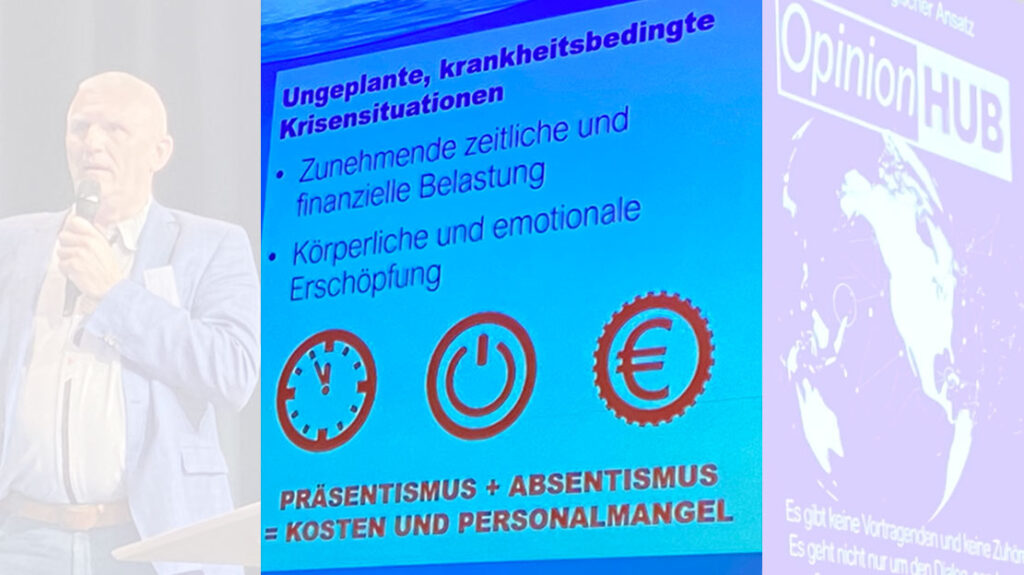
But the most valuable part of the workshop was not the presentation itself. It was the questions and the discussion that followed.
The presentation was overloaded with content, and the focus of the discussion quickly settled on OpinioNet.
RUMED 365 has also gained a clearer explanation: a rural doctor can become a consultant to the Institute for health management in Vienna and offer their knowledge, experience and available time to patients who are not their own and who do not live in their local community.
One of the first questions was simple: Which families is OpinioNet for?
The question was important because it revealed a possible source of confusion. If RUMED 365 is intended to support rural doctors, does that mean that OpinioNet is intended for their families?
No. OpinioNet is intended for all families.
Its basic communication structure connects the family, the employer, the healthcare sector and public institutions. The starting point is simple: one family member wants or needs to do something for another family member.
The reasons may vary.
- There is a problem that needs to be understood and explained.
- There is a need to improve living conditions.
- There is a need to increase the sense of security.
- There is a need for appropriate monitoring in order to prevent a problem.
One particularly significant question was: what can OpinioNet do for a farmer with mental health problems and for their family?
That question actually takes us one step back from medicine.
Does a person even recognise that they have a problem? And once they do, will they want and feel able, in a small community, to go to a doctor or confide in someone else?
Identity, stigma and the fact that people know one another can all become obstacles.
OpinioNet therefore enables communication and the search for solutions while protecting identity. At the same time, different forms of communication and interaction can help maintain social contacts and create connections with people outside the immediate environment.
The discussion opened another important perspective on RUMED: a rural doctor does not have to work professionally only within the boundaries of their own practice and their own patient population. Communication infrastructure can make their knowledge available to people from other communities while allowing them to continue living and working in a rural community.
Not all parts of the presentation received equal attention. The ten professional groups and ten thematic areas did not generate significant discussion, while the 16 aspects of the second opinion remained insufficiently presented.
RUMED 365 in Cartagena did not receive only questions that needed answers. It gained a clearer definition of the role of OpinioNet within RUMED, a more concrete picture of families’ needs, and confirmation that the professional reach of a rural doctor no longer has to be determined by the geographical reach of their practice.
Marijan Gjukić